
Home
Home | Dental Equipment | About | Solutions | Service | News | Contact Us
- All
- Product Name
- Product Keyword
- Product Model
- Product Summary
- Product Description
- Multi Field Search
 English
 Views: 0 Author: Site Editor Publish Time: 2025-12-10 Origin: Site


Dental forceps are a crucial tool in every dentist's toolkit. The right forceps make all the difference in successful extractions.
In this article, we’ll explore the different types of dental forceps and guide you through selecting the right tool for each procedure. You'll learn how tooth location, root morphology, and ergonomics play a role in ensuring optimal outcomes.
Design Pattern | Description | Ideal Usage |
American Forceps | Typically have a straight design, suited for upper teeth extractions. | Preferred for maxillary extractions, particularly for incisors and premolars. |
English Forceps | Have a more angled shape, making them ideal for lower jaw extractions. | Preferred for mandibular extractions, especially for molars and premolars. |
Selecting the right dental forceps for each tooth type is vital. For example, maxillary forceps are used for the upper jaw, typically for incisors and premolars, whereas mandibular forceps are used for the lower jaw. Each type of tooth, whether it’s an incisor, premolar, molar, or root tip, requires different designs and beak shapes to securely grip and remove the tooth.
When working with pediatric patients, pedo forceps are used. These smaller forceps are designed to cater to the delicate nature of primary teeth. For permanent teeth, stronger and more robust forceps are required to ensure that they can handle the sturdier structure of adult teeth and roots. Understanding these distinctions ensures minimal trauma to both the patient and surrounding tissue.
One of the most important factors in choosing the right dental forceps is the location of the tooth to be extracted. Upper and lower jaw extractions require different tools due to the varying anatomy of the jaw. It’s essential to select forceps that align with the specific tooth’s position and root orientation to avoid unnecessary force and trauma.
Ergonomics play a significant role in the long-term comfort and effectiveness of dental forceps. Forceps with ergonomic handles and lightweight designs reduce hand fatigue, allowing dental professionals to maintain precision during longer procedures. Choosing a forceps set with balanced weight and a comfortable grip ensures smoother operations and a more comfortable experience for the dentist.
Choosing high-quality dental forceps made from durable materials like surgical stainless steel ensures the longevity of your tools. Forceps with corrosion-resistant coatings maintain their functionality over time, even with frequent use and sterilization. Investing in durable tools reduces replacement costs and ensures reliable performance during extractions.
Certain extractions, such as those involving difficult-to-reach teeth or deeply embedded roots, require specialized forceps. Tools like split-beak forceps or apical forceps provide better access and precision when dealing with complex cases. Selecting forceps that match the complexity of the extraction improves the chances of a successful procedure and minimizes patient discomfort.
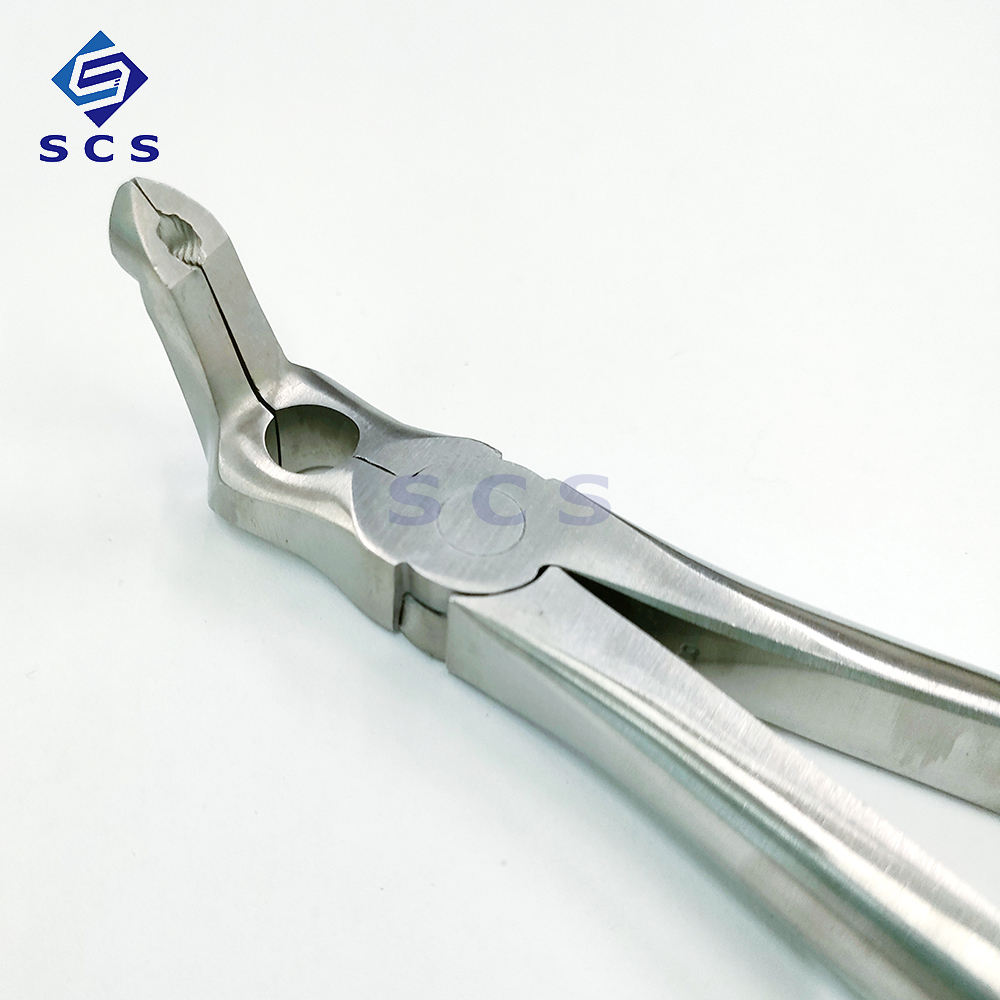
The use of the correct dental forceps not only ensures a smoother extraction process but also helps in minimizing trauma to the surrounding tissues. Forceps designed specifically for different tooth types and jaw positions reduce the amount of force required during extractions. This minimizes damage to gums, ligaments, and adjacent teeth, promoting a faster and more comfortable healing process for patients.
In challenging extractions, such as those involving deeply rooted teeth or complicated root anatomy, precision is key. Using specialized dental forceps designed for these scenarios allows the dental professional to maintain better control and alignment, reducing the risk of root fractures or incomplete extractions. Specialized forceps, like split-beak or apical designs, provide enhanced stability and grip, which is crucial for ensuring a successful outcome in more intricate procedures.
Modern dental forceps are crafted from high-grade materials like surgical stainless steel, known for its superior durability and resistance to corrosion. These materials ensure that the forceps maintain their strength and functionality even after extensive use and multiple sterilization cycles. In addition to the base material, specialized coatings, such as titanium nitride, are often applied to enhance the tool’s grip and precision. These coatings provide a slippery-free surface, improving control during extractions, especially in wet or challenging conditions. With these innovations, dental forceps can withstand the rigors of clinical environments while maintaining high performance, making them a reliable and long-lasting tool in any dental practice.
Incorporating ergonomic features into forceps design, such as spring-loaded handles or rotating grips, can significantly reduce stress on the dentist’s hand and wrist. These innovations provide smoother, more controlled extractions, even in challenging cases, and are essential for maintaining efficiency during prolonged procedures.
Modern dental forceps often incorporate micro-serrations or textured beaks to improve grip and control. This innovation significantly reduces slippage during extractions, ensuring a secure hold on the tooth, even in wet conditions. These features help prevent iatrogenic damage to adjacent teeth, root fractures, or soft tissue injury, making extractions more predictable and less traumatic for the patient. Some forceps, like the SurgiMac Hexa Series, feature non-slip grips that provide maximum tactile feedback, essential for complex extractions.
Customizable dental forceps offer flexibility for unique extraction needs. Some forceps are designed with interchangeable parts, such as different beaks, to allow dental professionals to tailor the tool to the specific extraction scenario. This versatility is especially helpful when working with patients who have unusual tooth anatomy or challenging root structures. Instruments such as SurgiMac’s Air Series offer modular parts to adjust based on the procedure, enabling clinicians to achieve the best grip and comfort for each individual case. This customization ensures more efficient extractions and reduces the risk of complications.
A thorough pre-extraction evaluation is crucial for selecting the right dental forceps. Radiographic assessments and root positioning help identify the best tools for the job. Factors such as root shape and accessibility should guide the selection process, ensuring that the correct tool is used to maximize precision.
Maintaining dental forceps requires regular cleaning, sterilization, and lubrication to ensure that the instruments remain in top condition. Proper care prevents rust, damage, and loss of functionality. It’s essential to inspect forceps frequently for signs of wear, particularly around the beaks, where the most pressure is exerted during use.
Using the wrong dental forceps can result in significant complications, such as incomplete extractions or root fractures. Maxillary forceps should never be used for mandibular teeth, as their design doesn’t suit the lower jaw’s anatomy. Always ensure that the tool you select matches the tooth’s location and characteristics.
Using the same pair of forceps for multiple extractions can lead to several complications. It’s essential to understand that each type of extraction may require different forceps for optimal results. Overusing the same forceps can lead to inefficiency, discomfort, and even damage to the surrounding tissues. Here’s why you should consider using specific forceps for different extraction scenarios.
Choosing forceps without considering ergonomics can lead to hand fatigue or discomfort during prolonged procedures. Over time, this may affect precision and efficiency, leading to mistakes. Forceps with ergonomic handles and balanced designs reduce stress on the dentist’s hand, allowing for smoother and more controlled extractions. It’s essential to choose tools that prioritize both the patient’s needs and the dentist’s comfort.
Forceps that have been damaged or worn out should never be used in procedures. Signs of wear, such as misaligned beaks, loose hinges, or corrosion, can impair the forceps' effectiveness. Using damaged tools increases the risk of imprecise extractions, leading to complications like incomplete extractions or damage to the surrounding tissue. Regularly inspect your dental forceps to ensure they are in optimal condition before each procedure.
The proper use of dental forceps can help minimize trauma to the surrounding tissues, which reduces the risk of post-operative complications such as infections. By using the correct tool for each extraction, including a forceps variant that fits the tooth’s shape and size, you can ensure a cleaner procedure with less tissue damage. This can also help promote faster healing and reduce the need for additional treatments.
Forceps with appropriate grip and design ensure that the tooth is extracted smoothly, which reduces the risk of excessive tissue damage and hemorrhaging. When dental forceps are chosen correctly based on tooth location and morphology, there is less force needed, which in turn minimizes damage to soft tissues like the gums, cheeks, or surrounding structures.
Choosing the right dental forceps is essential for successful extractions. Understanding the types, applications, and ergonomic features of dental forceps helps improve patient outcomes. Proper care and avoiding common mistakes ensure the longevity of your instruments. Foshan SCS Medical Instrument Co., Ltd. offers high-quality, ergonomic dental forceps designed to improve extraction precision and reduce fatigue, helping dental professionals deliver exceptional care while ensuring long-term success in their practice.
A: Dental forceps are essential tools used by dentists to extract teeth. They provide the necessary grip and control to remove teeth with minimal trauma, ensuring smooth extractions.
A: To choose the right dental forceps, consider the tooth’s location, shape, and root structure. For example, maxillary forceps are used for upper teeth, while mandibular forceps are best for lower jaw extractions.
A: Yes, pedo dental forceps are specifically designed for pediatric patients. These smaller, more delicate forceps are ideal for extracting primary teeth with minimal risk of injury to the surrounding tissues.
A: Ergonomics are important in dental forceps because they help reduce hand fatigue and provide better control during longer procedures. Well-designed forceps improve precision and comfort for dental professionals.
A: American dental forceps have a straight design, ideal for upper teeth, while English dental forceps are angled, making them better suited for lower jaw extractions, offering more precise control.


